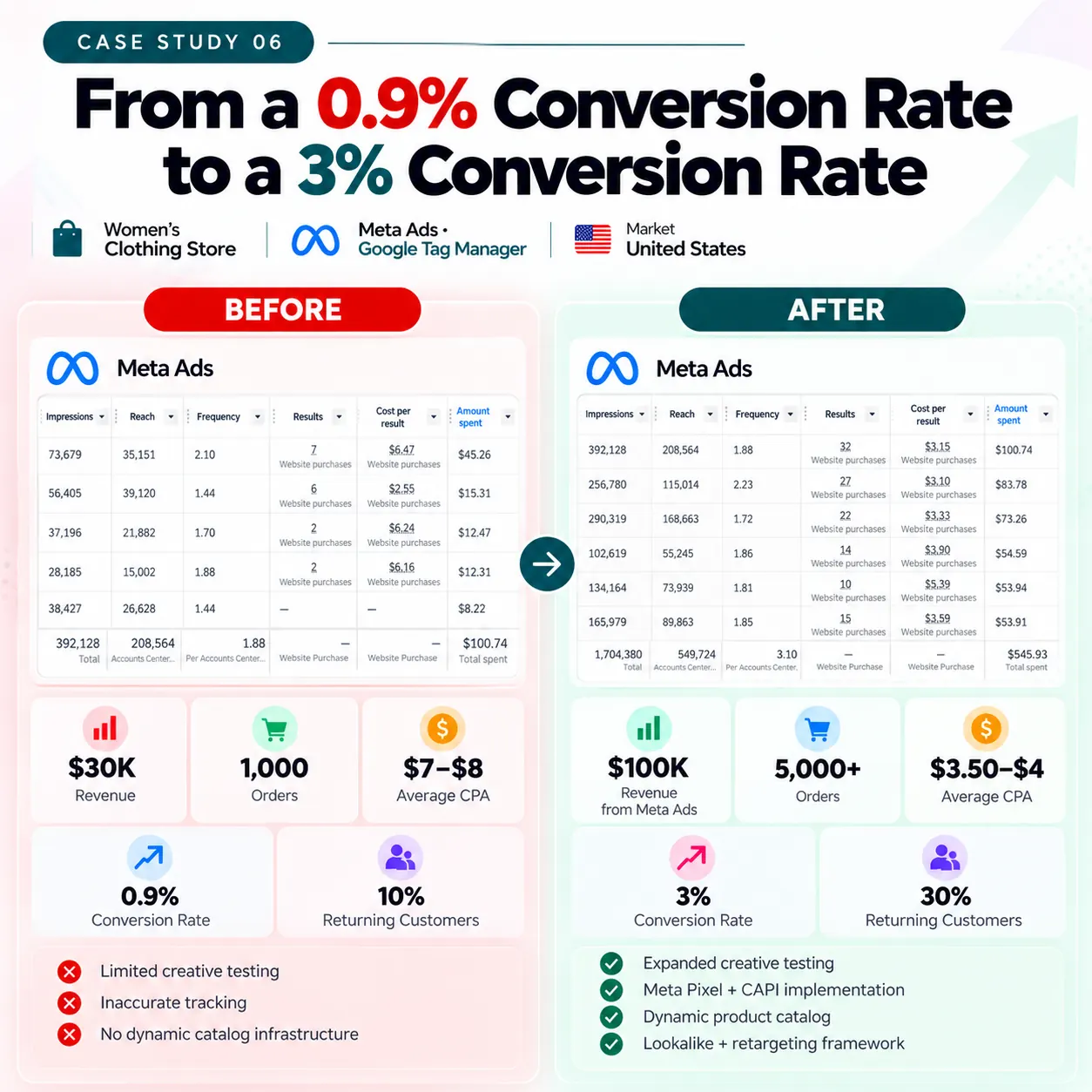
Limited creative testing and insufficient variation in ad content
No dynamic catalog system for automated product-feed optimization
Goals
Build a Scalable Meta Growth Engine
Scale total revenue by 4×
Reduce CPA to below $5
Increase conversion rate from 0.9% to 2–3%
Build a more scalable Meta advertising framework
Improve catalog accuracy for better optimization and attribution
Establish systems for creative testing, catalog marketing, and retention
The Process
How it was done
Restructured Meta Campaigns
Implemented Meta Advantage+ Shopping Campaigns to leverage Meta's machine-learning optimization for identifying and reaching high-value shoppers.
Budgets were progressively scaled based on CPA and ROAS performance.
Why
The objective was to move away from an inefficient campaign structure and allow stronger-performing signals to guide budget allocation and customer acquisition.
Built the Conversion Infrastructure
Implemented Meta Pixel + Conversion API (CAPI) through Google Tag Manager to improve event tracking and matching.
Why
Reliable conversion data was necessary to understand campaign performance and give Meta stronger signals for optimization.
Expanded Creative Testing
Developed lifestyle and product-focused video content around:
Fit
Comfort
Product experience
Seasonal fashion trends
The creative approach was designed around the preferences of U.S. fashion audiences.
Why
The account needed more creative variation to identify which messages, formats, and product presentations could generate stronger engagement and conversions.
Dynamic Product Catalog
Built and optimized a product feed for dynamic catalog advertising.
The catalog was used to showcase best-selling and related products through automated product placements.
Why
A dynamic catalog created more opportunities to personalize product exposure and support cross-sell and up-sell campaigns.
Built Audience Segmentation
Created lookalike audiences based on high-value purchasers and developed retargeting funnels for:
Cross-sell and up-sell retargeting campaigns were also introduced to support repeat purchases.
Why
The objective was to move beyond first-purchase acquisition and build a stronger customer journey across discovery, consideration, purchase, and repeat purchase.
Scaling & Optimization
Campaign budgets were scaled progressively based on CPA and ROAS performance while creative, audience, and catalog activity continued to be optimized.
Why
The goal was to scale the account while maintaining control over acquisition efficiency rather than increasing spend without performance signals.
Before & After
Before and after
Click to enlarge
★★★★★
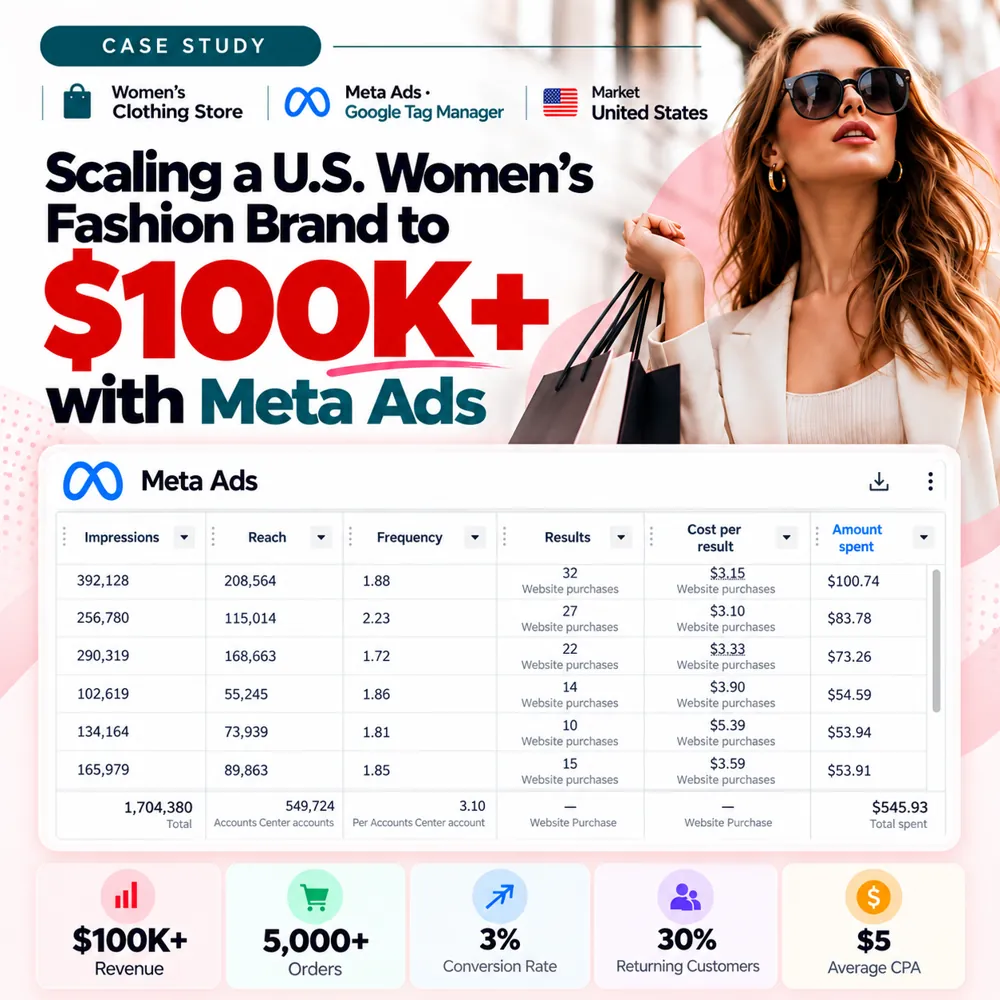
The Meta Ads strategy completely changed the way we approached customer acquisition. Within the campaign, we were able to generate over $100K in revenue while improving targeting, creative performance, and overall campaign efficiency. The structured testing and continuous optimization made a noticeable impact on our growth.
— Founder, Women’s Clothing Brand - USA
Want results like these for your brand?
Let's look at your account together and find the next lever for growth.

 Click to enlarge
 Click to enlarge